CALM / Living Objects / 2026
CALM /
Living Objects
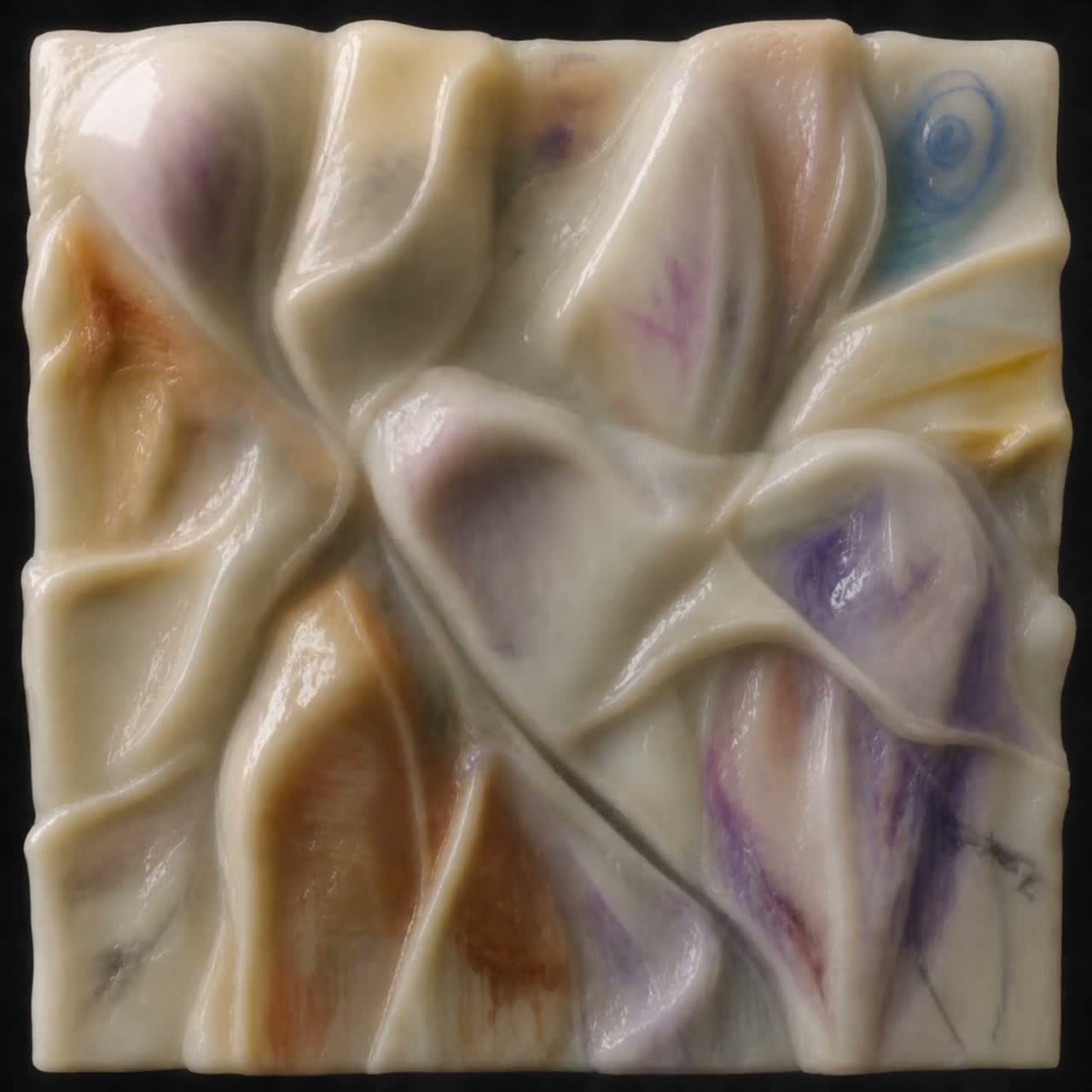
An original painting becomes the starting point for a responsive sculptural world. I explore how its marks, layers and tensions can become geometry, movement and interaction without losing the painting’s identity.
Ongoing self-initiated research. Offline motion studies, working interaction prototype and proposed installation are distinct stages.
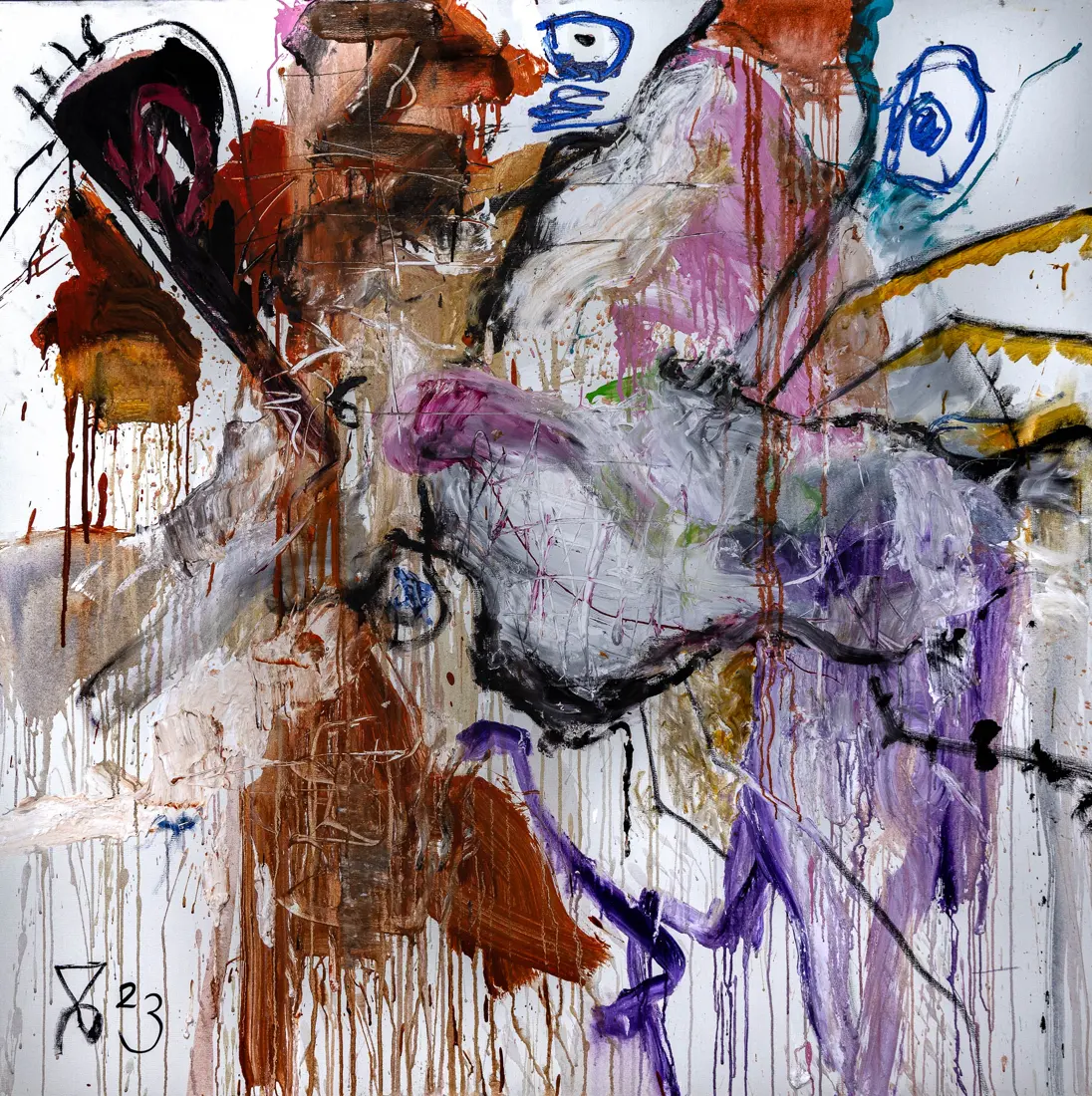
The painting is the source
I painted CALM, then translated its composition into 70 addressable regions. Their roles, boundaries and intensities become controls for material and geometry. The direction comes from the painting’s gestures and tensions, rather than applying an unrelated texture to an object.
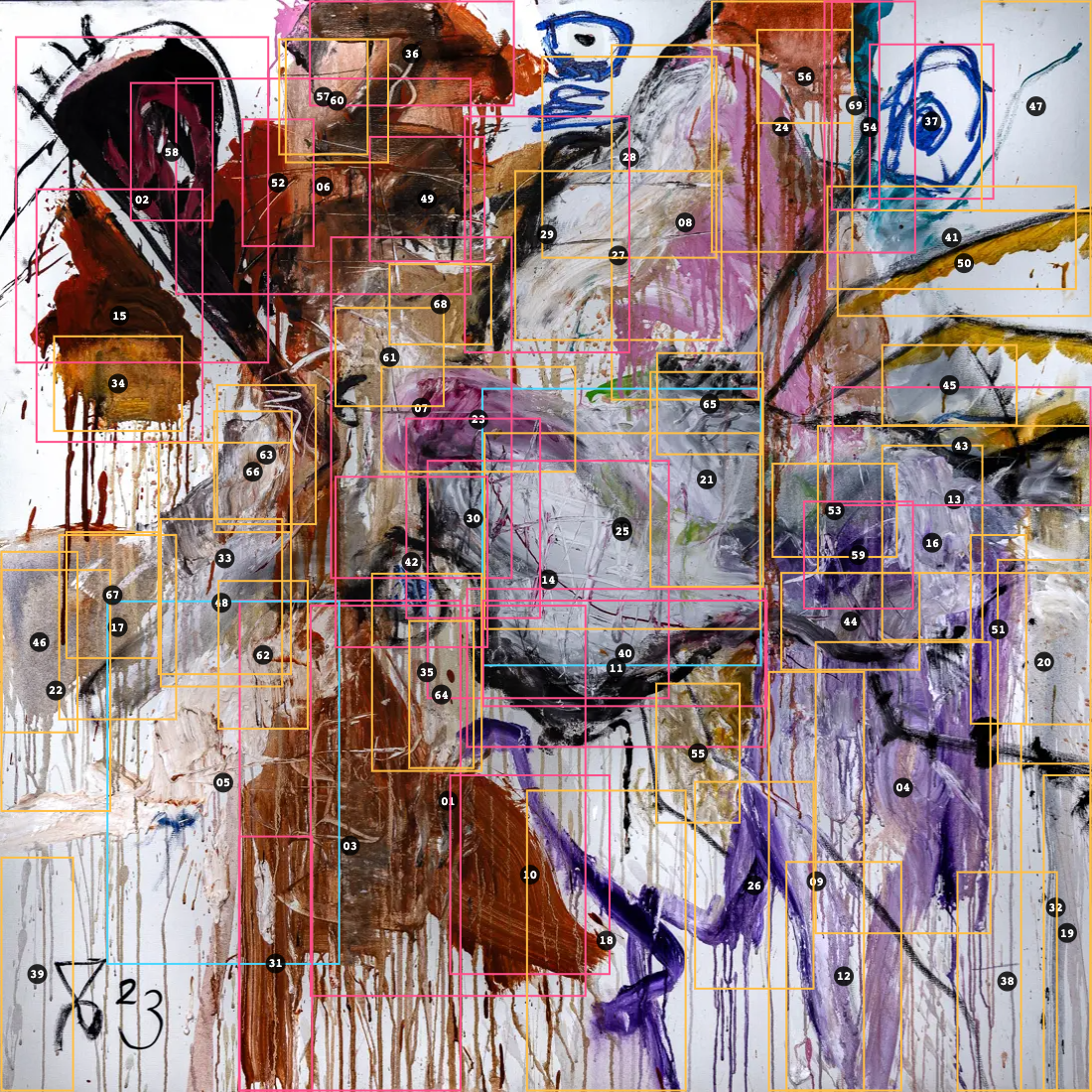
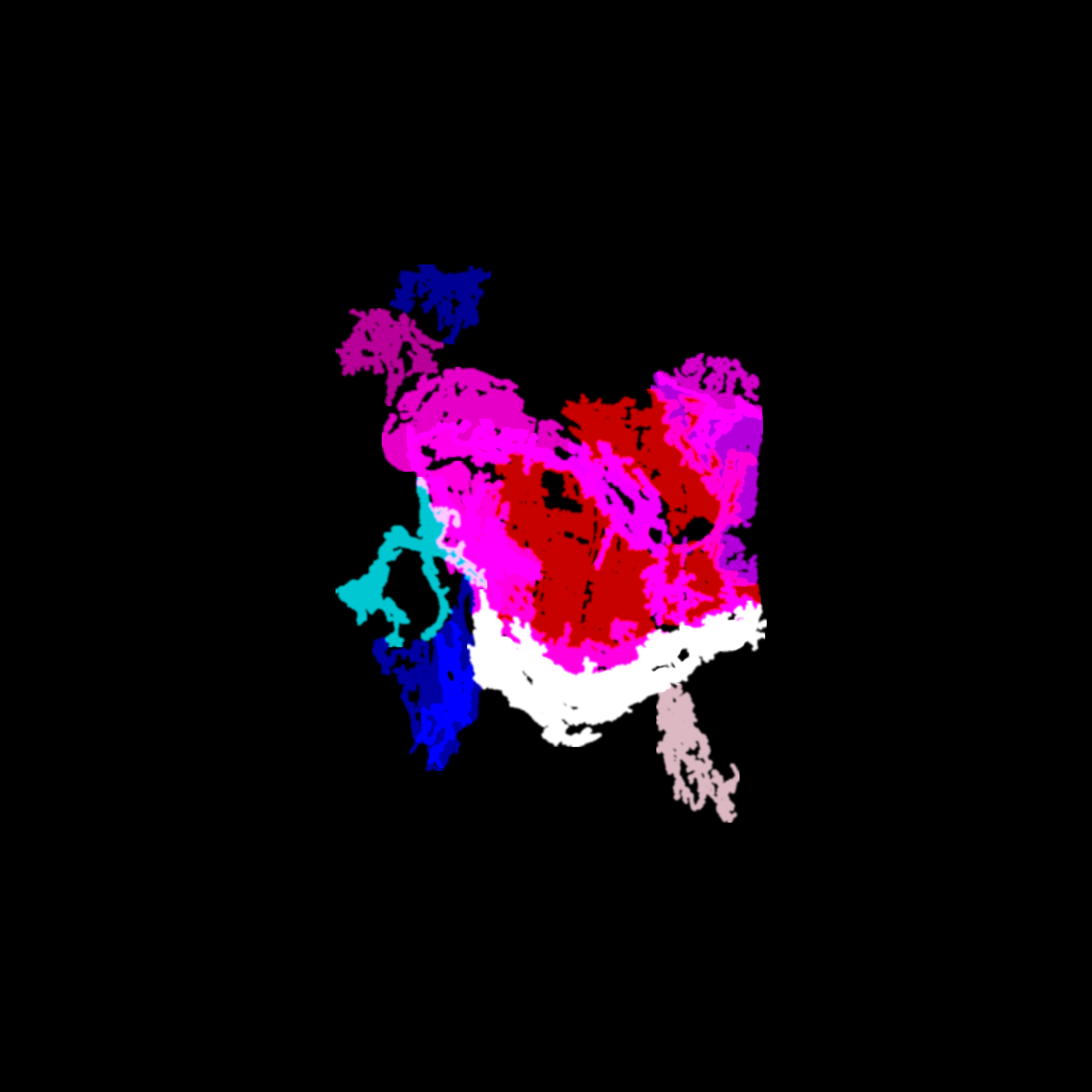
Separate layers control the response
I developed the mapping and control logic across region roles, relief, normals, membrane behaviour and failure paths. These fields give different parts of the painting different material functions. I directed the volumetric translation and reviewed the assisted modelling and implementation against the source.
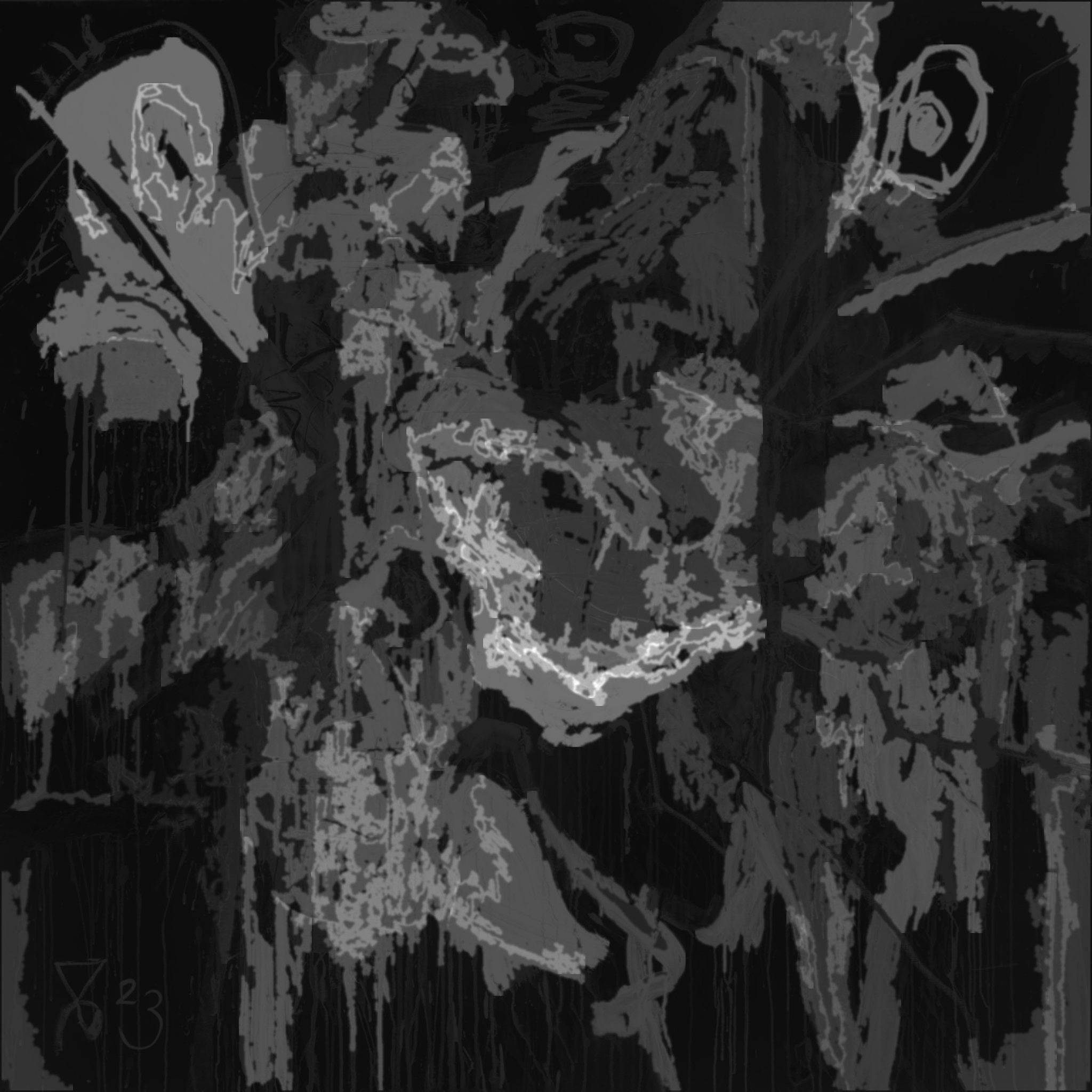
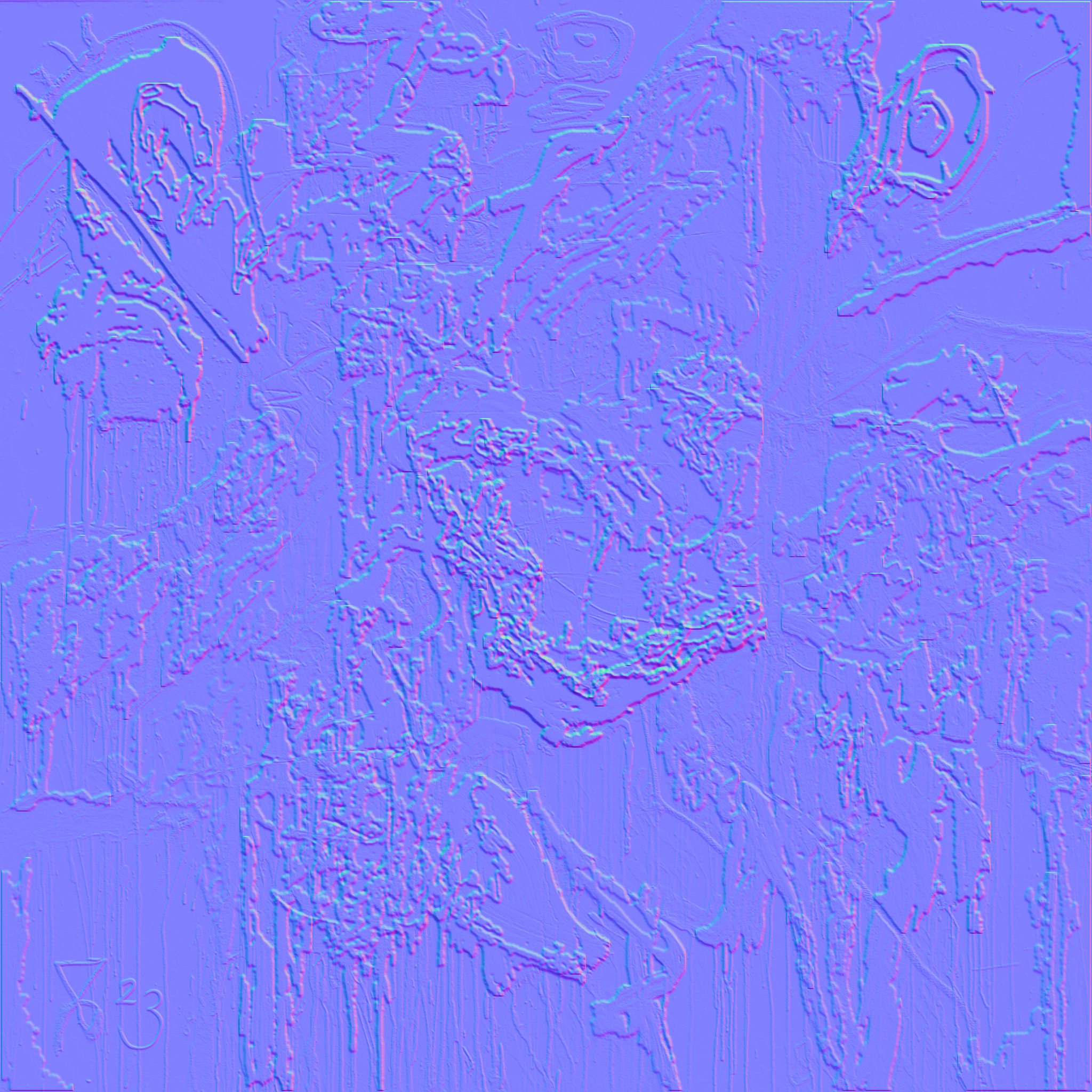

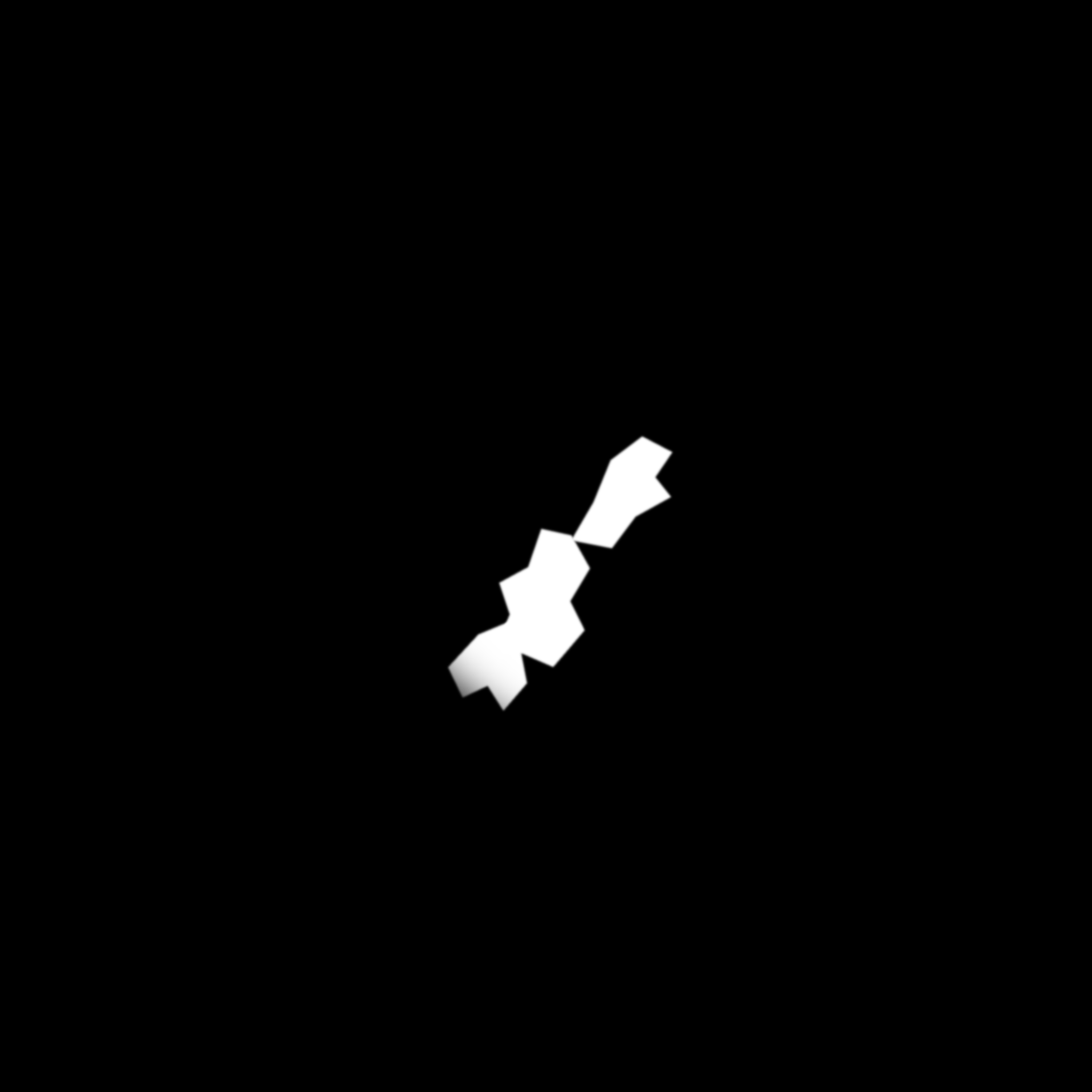
Meshy 7 · Blender / Cycles · JavaScript · Three.js / WebGL · GLSL · Vite. 3D modelling and code implementation assisted; painting, mapping, material direction and interaction specification by Eliz.
A material vocabulary, tested in motion
I directed a ten-state offline material sequence, from living latex and pigment memory to stress, delamination and rupture. I selected transitions that preserve the painting’s folds and identity, and rejected disconnected cavities and unrelated textures. This motion research is separate from the real-time prototype.
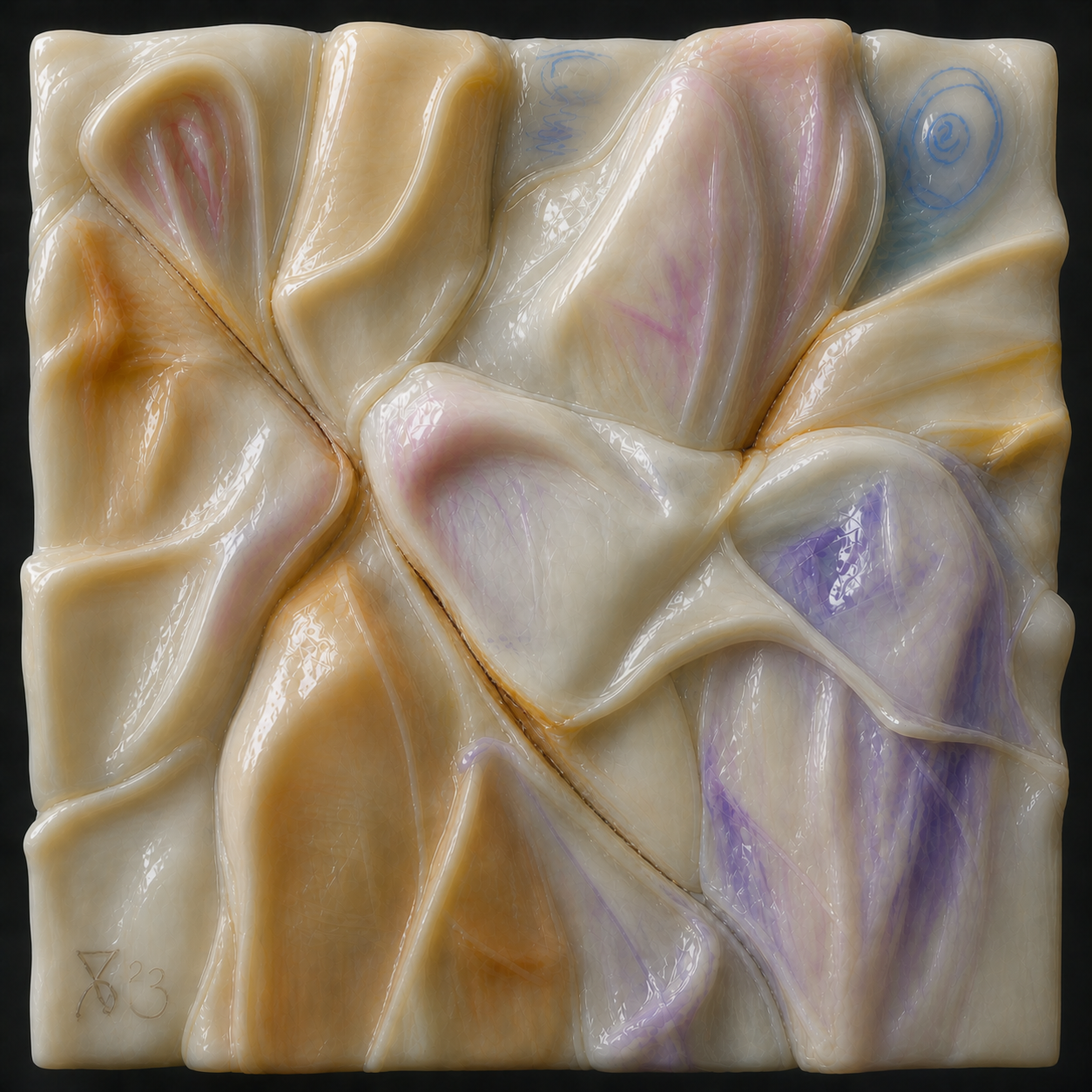
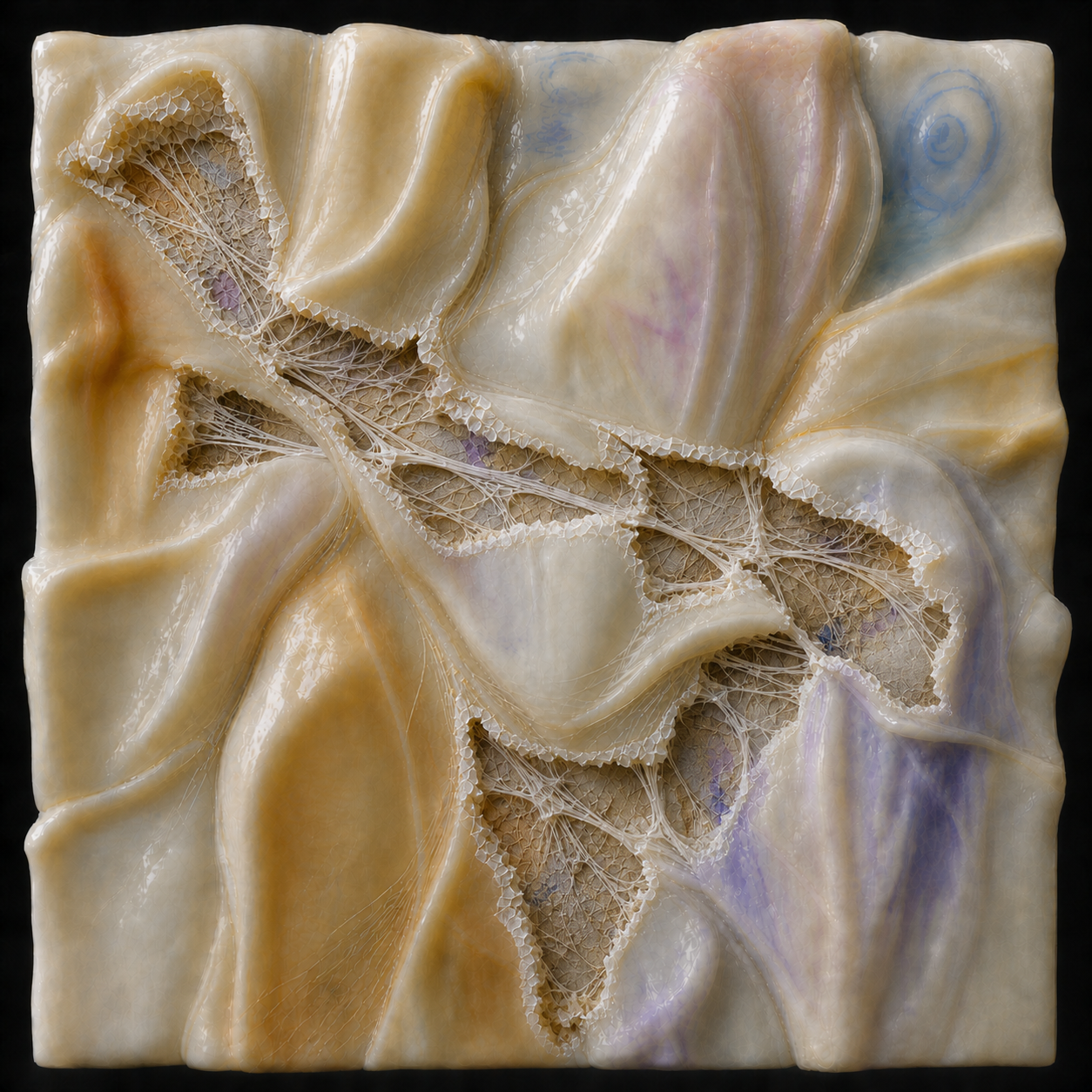
Higgsfield / Seedance · Kling · Selected motion generation, editing and continuity review.
Typed language leaves a trace
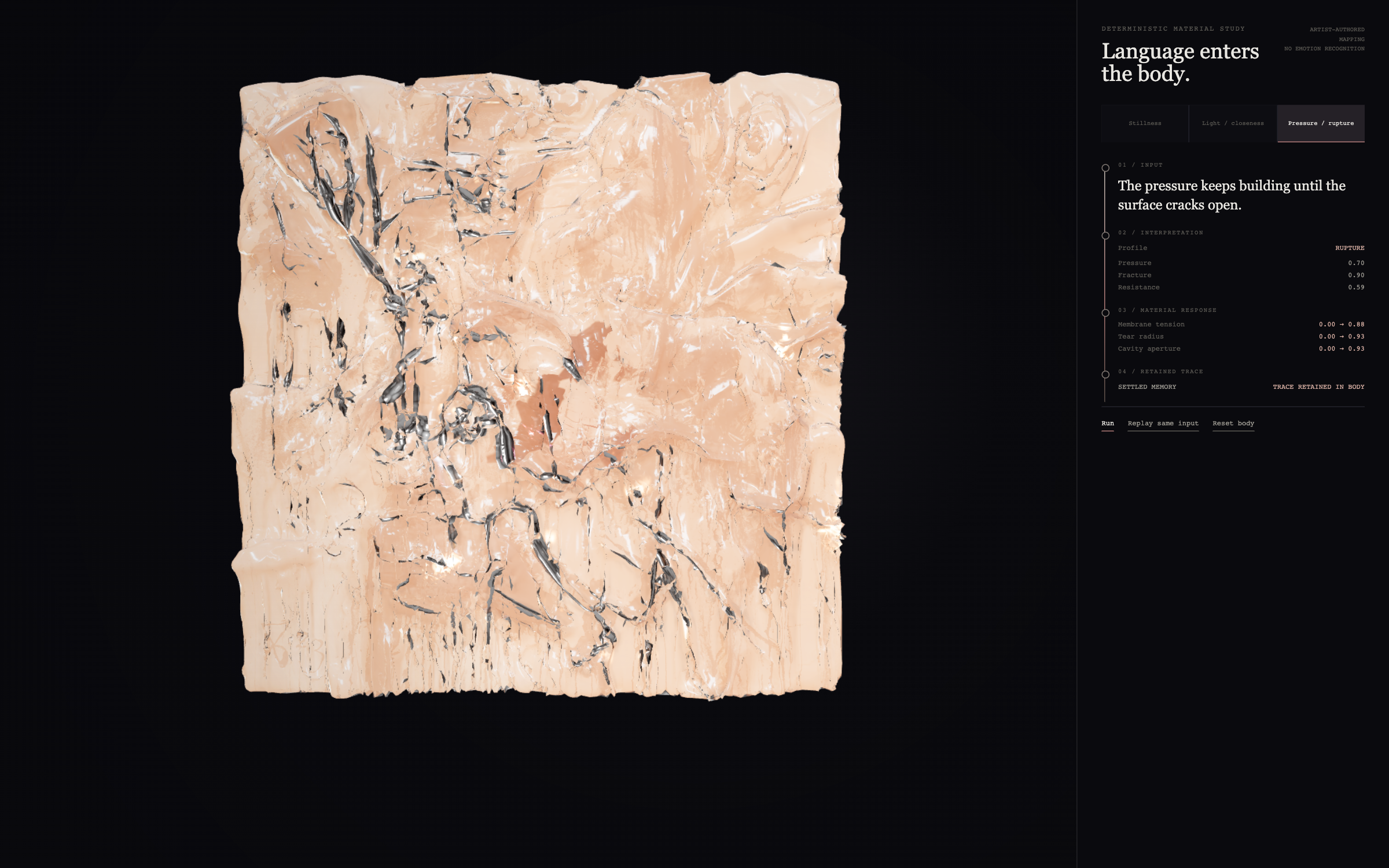
I defined how typed language maps to material parameters, produces a staged response and leaves an abstract trace. The bounded browser prototype supports replay and reset. It demonstrates this interaction relationship; it does not yet reproduce the full offline material sequence in real time.
Where the work can go
The proposed installation would enlarge the material into a spatial encounter with typed input, optional consented sensing and directional sound. Presence, voice and multi-session memory remain development directions, not completed installation features.